
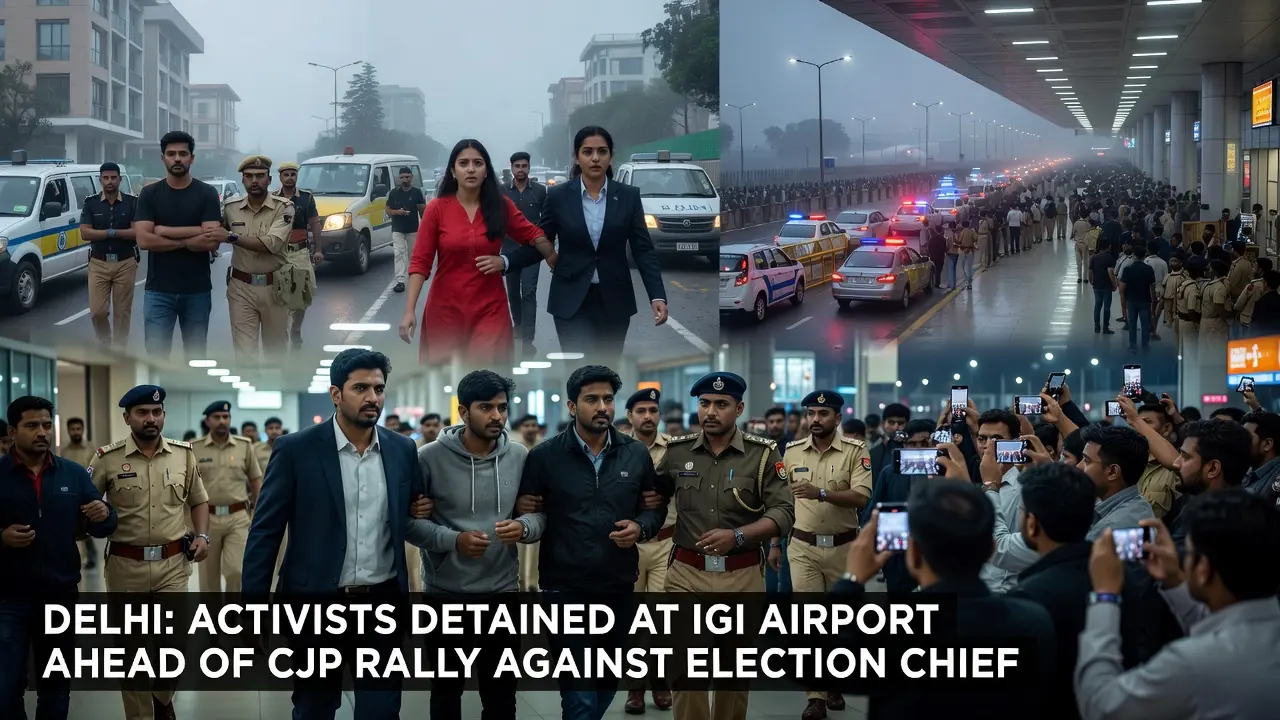
Police in Delhi moved before dawn against organisers of a planned demonstration calling for the resignation of Chief Election Commissioner Gyanesh Kumar. Activists Abhijeet Dipke, Saurav Das and Ashutosh Ranka were taken into custody directly from their flight shortly after it landed, with footage of the detention posted by the Citizens for Justice and Peace (CJP) network. YouTuber Dhruv Rathee was separately detained at his home in Gurugram, while influencer Kavya Karnatac and CJP's legal head, Ratna Singh, were also picked up.
What Delhi Police Say Is Happening
According to Delhi Police, roughly 600 people have been detained across the city, with officials citing around 50 individuals as having alleged criminal records among those picked up. The stated justification is public order, ahead of what organisers describe as the second major protest demanding accountability from the Election Commission. Preventive detention ahead of large gatherings is a recognised, if contested, tool under Indian law - authorities can act on apprehension of a breach of peace rather than an offence already committed. The scale described here, hundreds detained before a protest has even assembled, is what has drawn attention far beyond the immediate participants.
The Legal Flashpoint: Article 19 and Preventive Detention
Before departing, Dipke publicly invoked Article 19 of the Constitution, which guarantees freedom of speech and the right to assemble peaceably, framing his detention as a direct test of that guarantee. This is the crux of the dispute. Indian courts have repeatedly held that the right to protest is constitutionally protected but not absolute - it can be restricted on grounds of public order, security or decency, provided restrictions are reasonable and proportionate. Critics of large-scale preventive detention argue that picking up organisers, legal counsel and commentators before any unlawful act occurs effectively neutralises the right itself, rather than regulating its exercise. Supporters of the police response argue that intelligence about planned disruption justifies early intervention. Both positions have precedent in Indian jurisprudence, which is precisely why this episode is likely headed toward judicial scrutiny rather than resolution on the street.
Why the Target of the Protest Matters
The underlying demand - the resignation of the Chief Election Commissioner - places this squarely in the domain of electoral governance, not routine law and order. The Election Commission's independence is a foundational pillar of Indian democracy; any perception that pressure on its leadership is being suppressed through detention of critics, rather than contested through public debate, carries weight beyond this single protest. When detentions extend to journalists, legal advisers and digital commentators with large followings, the optics shift from crowd control to something closer to pre-emptive silencing of dissent, whether or not that was the operational intent.
What Comes Next
Detentions of this scale typically trigger habeas corpus petitions, bail applications and judicial review within days. The courts, not the streets, will likely determine whether this action holds up as proportionate policing or oversteps constitutional limits. For the public, the episode is a reminder that the mechanics of protest rights in India are tested case by case, often under pressure, and that the line between preventing disorder and curbing legitimate dissent is drawn by courts after the fact - rarely cleanly, and rarely quickly.