
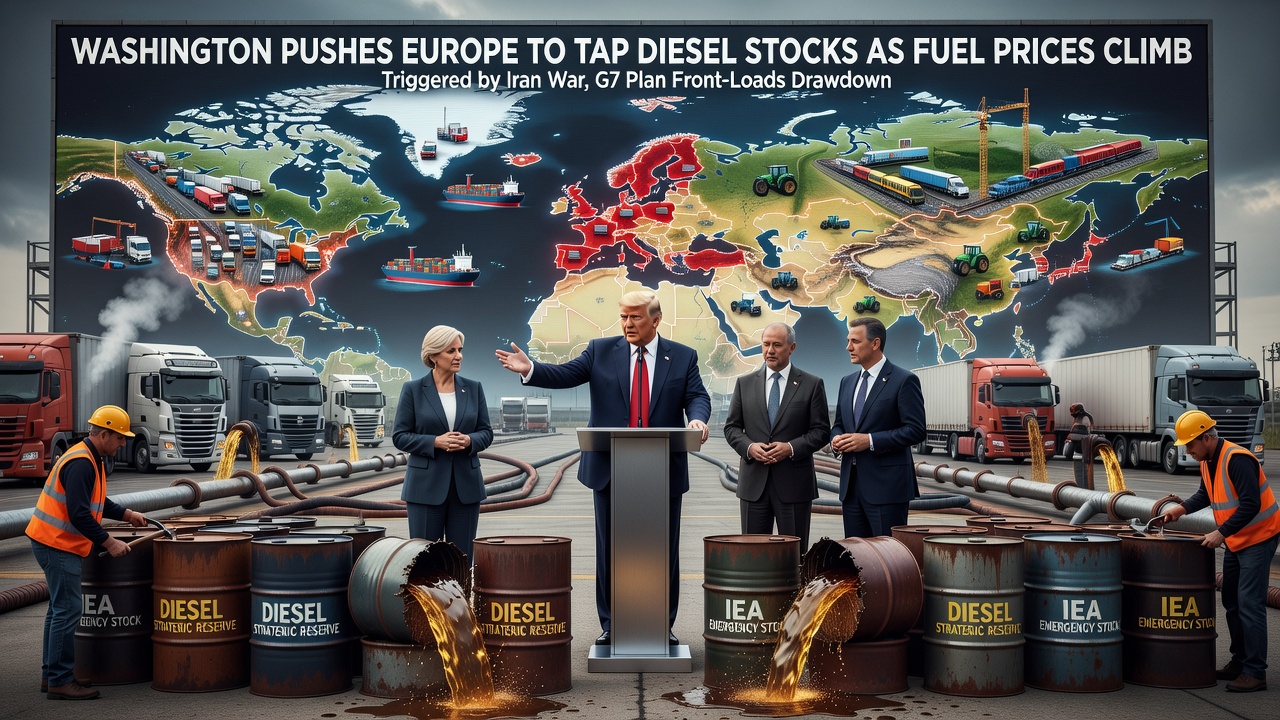
Diesel markets have become the latest front in the fallout from the war involving Iran, with Donald Trump pressing European governments to release emergency fuel reserves as prices climb on global markets. Trump said Europe had agreed to free up a "massive amount" of diesel, with the drawdown starting immediately. The announcement coincides with a broader G7 plan to release up to 100 million barrels of strategic oil reserves through the International Energy Agency over four months, with diesel releases front-loaded into the first 20 days.
Why Diesel Became the Flashpoint
Diesel sits at the center of industrial economies in a way gasoline does not. It powers freight trucks, shipping fleets, agricultural machinery and much of Europe's rail and construction sector. When diesel supply tightens, the effects ripple into food distribution, manufacturing costs and retail prices well before consumers notice anything at the pump. Disruption to energy supplies tied to the conflict with Iran has added fresh strain to a market that was already structurally tight after years of underinvestment in refining capacity, particularly in Europe, which relies heavily on imported diesel and refined products.
What a Strategic Reserve Release Actually Does
Strategic petroleum reserves exist precisely for moments like this. Governments stockpile crude and refined products so that, during a supply shock, they can inject volume into the market quickly and blunt a price spike before it spreads through the wider economy. The International Energy Agency coordinates these releases among member countries, a mechanism built after the oil crises of the 1970s. A release does not fix underlying supply constraints - it buys time, smoothing price volatility while producers and refiners adjust. The front-loaded diesel component signals that policymakers see the first few weeks as the most acute period of risk.
Economic and Political Stakes
Fuel price spikes carry political weight far beyond energy policy. Rising diesel costs feed directly into inflation readings, transport tariffs and food prices, making this as much a domestic economic concern for European governments as a diplomatic favor to Washington. Trump's public framing of the move as something Europe "agreed" to do also underscores how energy diplomacy has become entangled with broader transatlantic politics during a period of military tension in the Middle East. For markets, the key questions now are how quickly the released volumes reach refiners and distributors, and whether the intervention is enough to offset further disruption if the conflict with Iran escalates or affects shipping routes through the Gulf.
- G7 plan: up to 100 million barrels released via the IEA over four months
- Diesel component front-loaded within the first 20 days
- Goal: ease pressure on fuel markets strained by the Iran conflict
- Reserve releases address short-term volatility, not structural supply gaps