
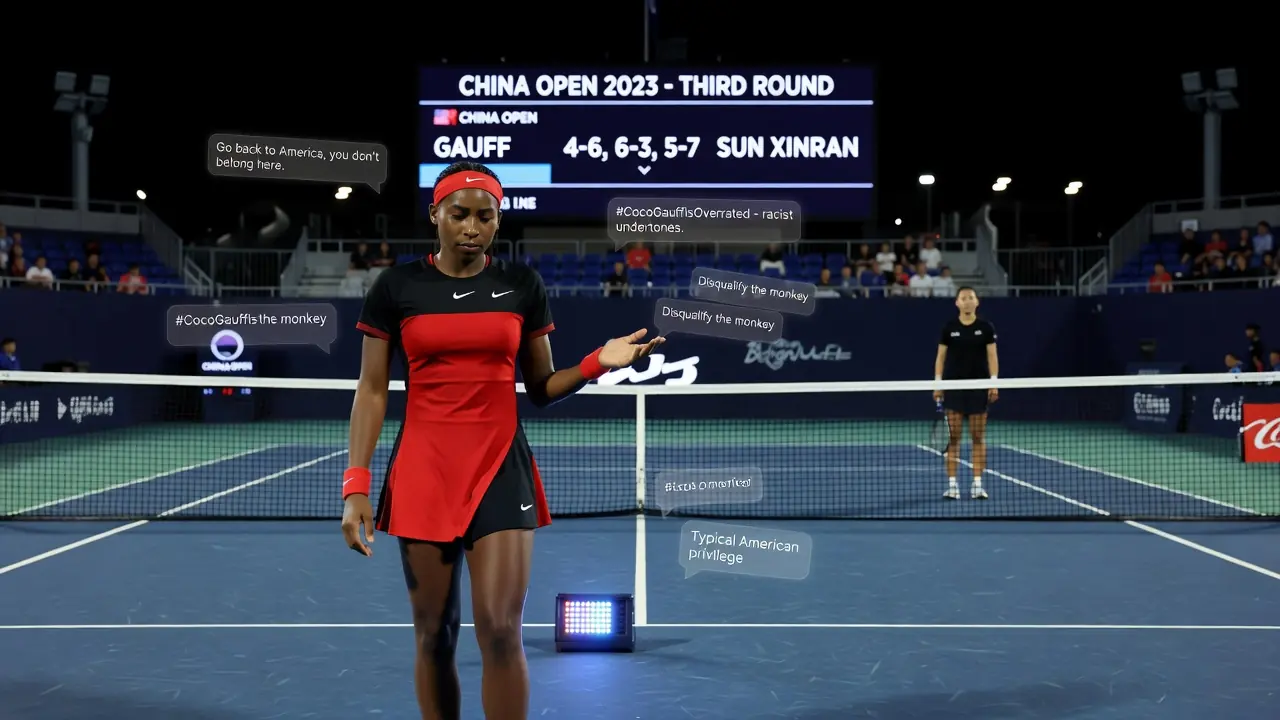
Coco Gauff exited the China Open in the fourth round on Wednesday, beaten 6-3 6-3 by Elise Mertens, but the defeat was overshadowed by what the American described as a "draining" few days spent dealing with racist abuse online. The harassment followed a contentious moment in her third-round win over 16-year-old Chinese player Sun Xinran, when Gauff halted play to request a video review over a flickering courtside light.
What triggered the backlash
Sun appeared to have won a point late in the first set when Gauff raised her hand, citing a malfunctioning light panel around the court. Under WTA rules, players may request a video review in such circumstances. The replay led to the point being retaken, and Gauff eventually won both the point and the match. The decision, while procedurally sound, drew intense criticism from some online, and Gauff later posted a lengthy statement explaining her reasoning before condemning the volume of racist messages that followed.
A recurring problem in elite sport
Gauff's experience is not isolated. Athletes across tennis, football and other high-visibility sports have repeatedly reported waves of targeted abuse after contentious on-field moments, often amplified within hours through direct messages and public comments. The speed and scale of this abuse expose a structural weakness in how social platforms moderate content tied to live sporting events, when emotions run highest and moderation systems are most tested.
The WTA said it was "appalled" by the abuse directed at Gauff and confirmed it was in direct contact with her to offer support. In a statement to AFP, the organisation said it was "seeking action" against the abusive content, though it did not specify what form that action would take. That ambiguity reflects a wider challenge facing sports governing bodies: they can condemn abuse and request platform intervention, but they rarely control enforcement outcomes, which remain the responsibility of the social media companies hosting the content.
Platform accountability and the limits of response
Technology companies have faced growing pressure from sports organisations, players' associations and regulators to strengthen detection of abusive content before it reaches athletes, rather than relying on reactive takedowns. Measures such as automated filtering of targeted slurs, restrictions on anonymous account creation and faster reporting channels have been proposed across multiple sports, but implementation remains inconsistent between platforms and jurisdictions.
For players, the practical response is often limited. Gauff said she simply turned off her phone, acknowledging there was little else she could do in the moment. That reflects a broader pattern: athletes are frequently left to manage the psychological toll individually, even as governing bodies issue statements of support. The gap between institutional condemnation and enforceable consequence remains one of the more persistent problems in digital sports culture, raising ongoing questions about whether platforms, leagues or regulators should bear primary responsibility for protecting competitors from abuse generated by their own fanbases.
On-court fallout
Whether the abuse affected her performance is unclear, but Gauff herself pointed to inconsistency rather than external pressure. She committed 34 unforced errors and eight double faults against Mertens, admitting she "was just a bit flat" and could not sustain her level throughout the match. Mertens now advances to face six-time Grand Slam champion Iga Swiatek, who defeated American teenager Iva Jovic 6-1 6-3, in the quarter-finals.