
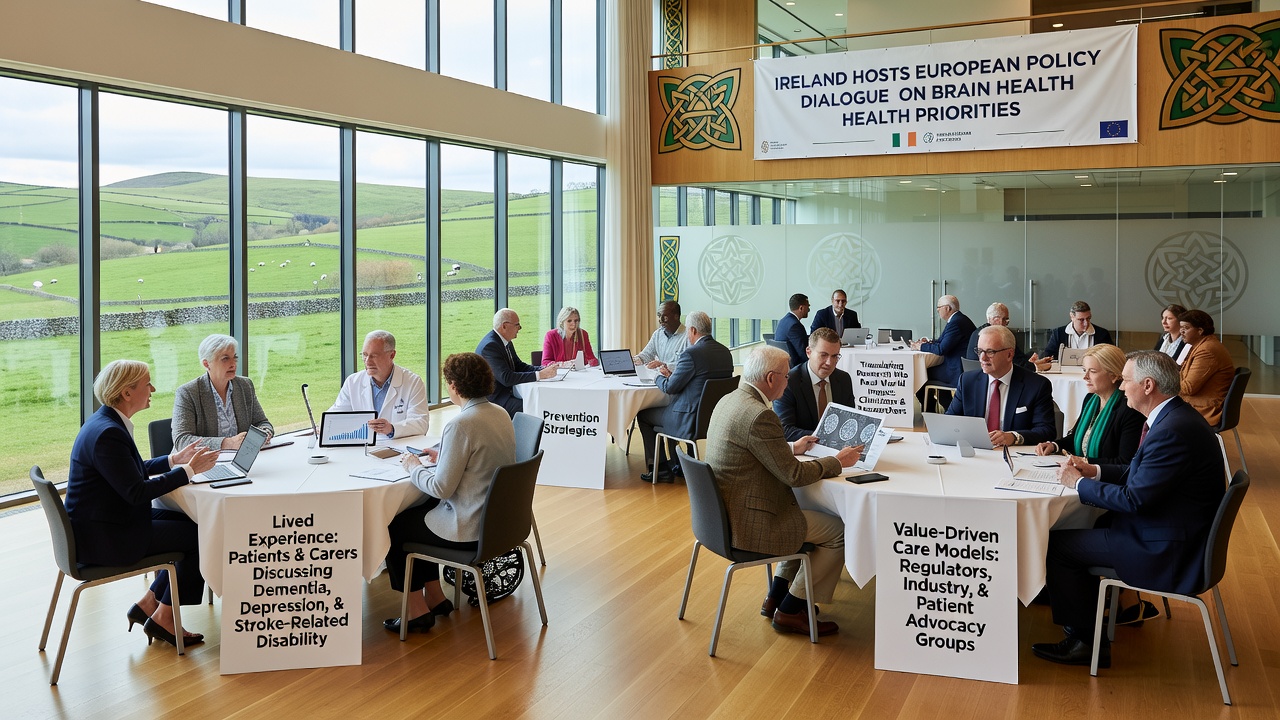
Brain health policy rarely gets a seat at the same table as the people it affects most. That changes with A Value-Driven Future for Brain Health & Care, an interactive Policy World Café bringing together patients, carers, clinicians, researchers, regulators and industry representatives to draft practical recommendations for brain health systems in Ireland and the wider European Union. The gathering is timed to the Irish Presidency of the Council of the European Union, giving it institutional weight beyond a typical conference panel.
Why Format Matters as Much as Content
The World Café model is deliberately different from a conventional symposium. Rather than a sequence of speeches followed by brief audience questions, participants rotate through small facilitated discussions, each tackling a distinct challenge: lived experience, prevention, translating research into real-world impact, and value-driven care. The structure is built to surface disagreement as well as consensus, and to push attendees toward specific, actionable language rather than general statements of intent. That matters because brain health policy has historically suffered from a gap between high-level ambition and the practical detail needed to change how services are funded, delivered and measured.
Who Is in the Room
The guest list is the point. Policymakers and health-system administrators sit alongside people with direct experience of neurological or mental health conditions, and alongside the carers who often absorb the practical burden of long-term illness. Researchers and funders are present to connect scientific priorities with what patients say they actually need. Industry and innovation representatives bring a perspective on what is technically and commercially feasible, while patient advocacy groups act as a check on whether proposals reflect lived reality rather than institutional convenience. This mix is intended to avoid a familiar failure mode in health policy: recommendations drafted by experts that patients later find disconnected from their daily experience.
From Dialogue to Policy Recommendations
The event's four thematic challenges are designed to feed directly into a closing policy dialogue, meaning the ideas generated are not meant to sit in a report that no one reads. Prevention strategies, research-to-impact pathways and value-based care models are all areas where the European Union has signalled growing interest, particularly as health systems across the continent face pressure from ageing populations and rising rates of chronic neurological and mental health conditions. A rotating EU Presidency gives the host country a limited but real opportunity to shape the bloc's agenda, and brain health has increasingly featured in discussions about long-term health-system resilience.
Why This Matters Beyond the Room
Brain health conditions, from dementia to depression to stroke-related disability, represent one of the more significant long-term burdens on health systems in Europe, both in terms of care costs and workforce impact on families. A more coordinated, people-centred approach has implications not just for individual patients but for how governments plan budgets, train clinicians and fund research. Value-driven care, a term used throughout the event's framing, generally refers to structuring health services around outcomes that matter to patients rather than volume of treatment delivered. Whether this gathering produces recommendations with lasting influence will depend on what happens after the closing dialogue, when ideas generated in facilitated small groups meet the slower, more constrained process of actual policymaking.