
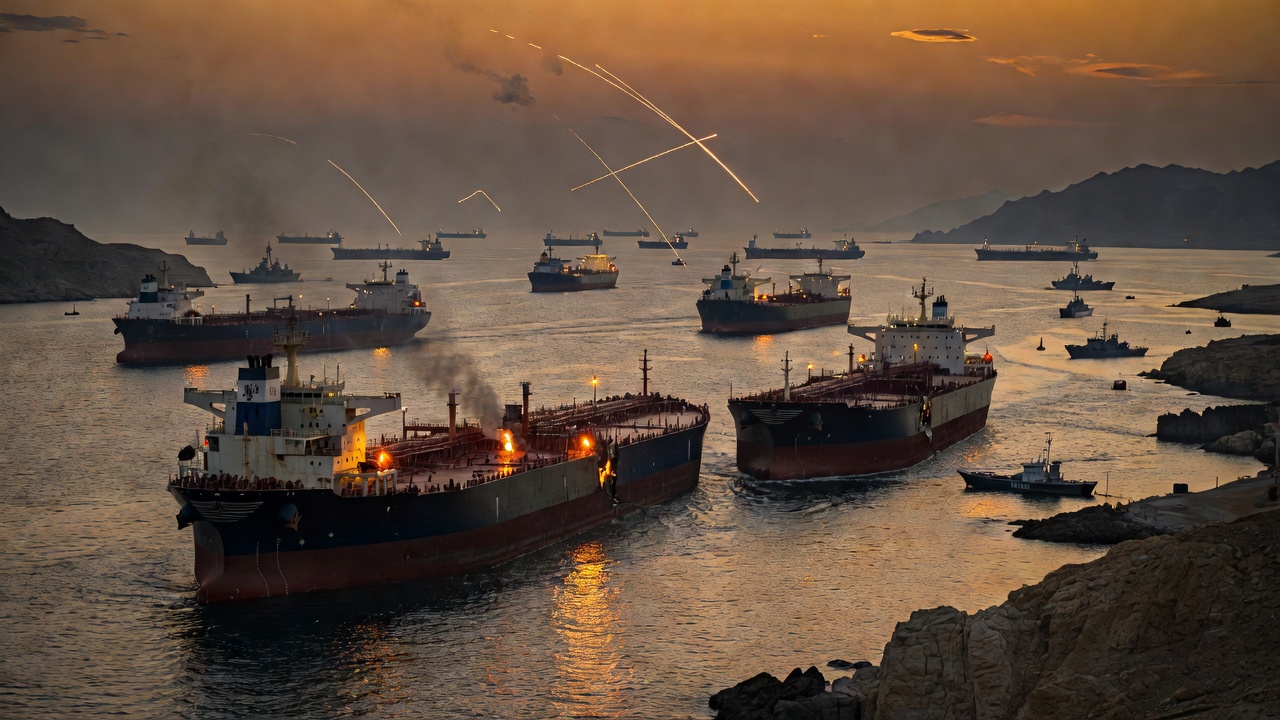
Two oil tankers were struck by unidentified projectiles while passing through the Strait of Hormuz, one of the busiest and most strategically sensitive waterways on earth. The UK Maritime Trade Operations agency confirmed one vessel suffered a small fire and a temporary blackout after being hit, while a separate crude carrier was struck on its port side near Oman. No injuries or oil spills were reported, but the incident has again exposed how fragile security remains along a corridor that handles a substantial share of the world's seaborne oil trade.
A Chokepoint Under Constant Strain
The Strait of Hormuz sits between Iran and the Arabian Peninsula and narrows to just a few dozen kilometers at its tightest point. Tankers moving crude from Saudi Arabia, the UAE, Qatar and Iraq have no practical alternative route, which makes the strait a recurring flashpoint whenever regional tensions rise. Previous years have seen limpet mine attacks, vessel seizures and electronic interference with ship navigation systems in the same waters. Each incident, regardless of scale, tends to ripple through global energy markets because traders price in the risk of disruption even when actual damage is minor.
Why Attribution Is Difficult and Consequential
UKMTO's statement did not identify who fired the projectiles, and that ambiguity is itself part of the pattern. Attacks in this region are frequently unclaimed, carried out with drones, missiles or small craft that are hard to trace conclusively. The lack of attribution complicates any response: insurers, naval coalitions and shipping companies must act on risk assessments rather than confirmed facts. Iran has been linked to similar episodes in the past amid disputes over sanctions and territorial waters, but suspicion is not evidence, and rushing to blame any single actor before an investigation concludes would be irresponsible.
Commercial and Regulatory Fallout
For shipowners and charterers, incidents like this translate directly into higher war-risk insurance premiums, more cautious routing decisions and tighter security protocols on board. Flag states and maritime regulators typically respond by issuing updated advisories, and naval forces from multiple countries already patrol the area to escort or monitor vulnerable traffic. The broader effect is economic: oil markets are sensitive to Hormuz disruptions because a meaningful share of global seaborne crude and liquefied natural gas passes through the strait daily. Even an incident causing no casualties or spills can nudge freight rates and oil prices because the real exposure is to future escalation, not just the event itself.
What Comes Next
Expect scrutiny to center on three things: whether further incidents follow in quick succession, whether any state or group claims responsibility, and how coalition navies adjust their presence in response. Shipping companies will likely reassess transit schedules and insurance arrangements in the near term. For an industry already navigating sanctions regimes, geopolitical rivalry and fluctuating energy demand, this latest episode is a reminder that the physical infrastructure of global oil trade remains exposed to risks that no amount of market planning can fully offset.