
Britain's car industry remains one of the most consequential manufacturing sectors in the national economy, generating tens of billions of pounds in turnover and value added each year. Its reach extends well beyond factory gates, touching finance, logistics, chemicals, steel and advertising, while shaping how the country meets its climate commitments and regional investment ambitions.
A Manufacturing Base With National Reach
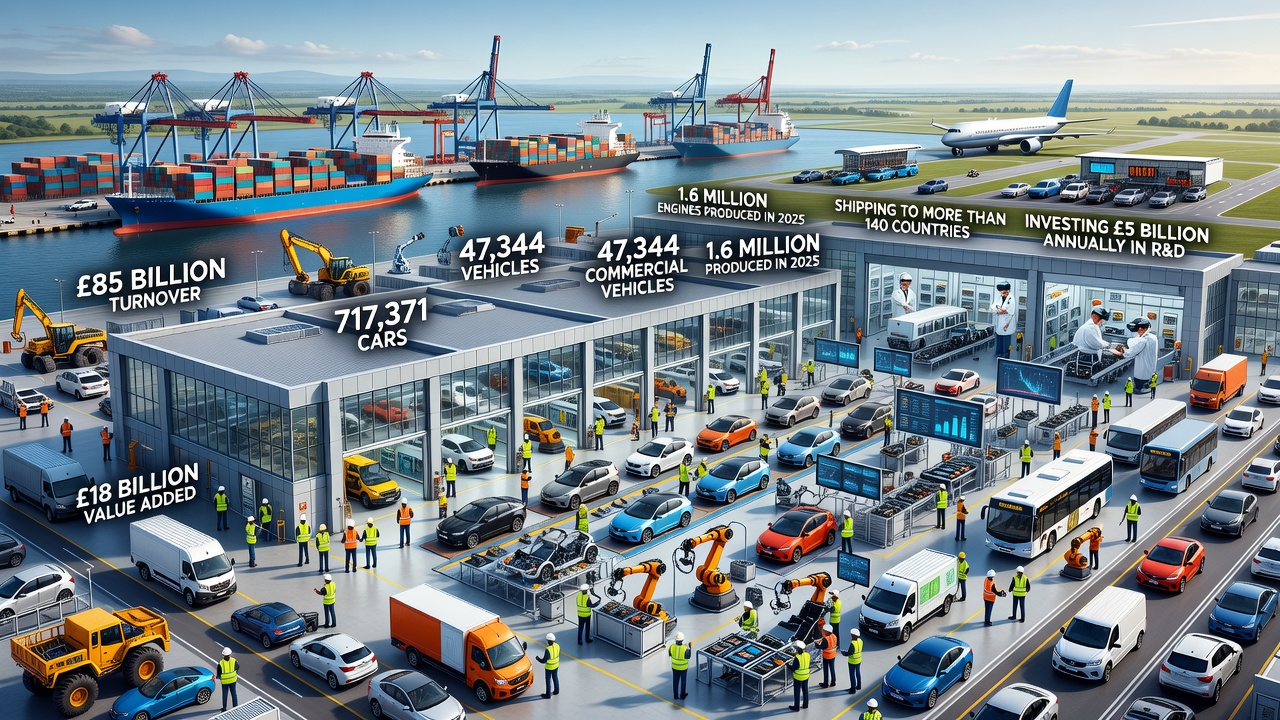
Automotive-related manufacturing contributes £85 billion in turnover and £18 billion in value added to the UK economy, with the sector typically investing around £5 billion annually in research and development. That scale of reinvestment matters because vehicle manufacturing is capital-intensive and increasingly shaped by the shift toward electrification, software-defined vehicles and low-carbon production methods. Sustained R&D spending signals that manufacturers are not simply maintaining existing lines but adapting to a market in structural transition.
Employment figures underline the sector's social weight: more than 183,000 people work directly in manufacturing, with around 830,000 employed across the wider automotive industry when suppliers, dealers, logistics and aftermarket services are included. This breadth explains why government strategies on levelling up and regional growth frequently reference the sector - automotive jobs are concentrated in specific manufacturing regions, making the industry a practical lever for addressing geographic economic imbalance rather than a purely abstract policy goal.
Exports and Global Trade Position
The UK ships vehicles to more than 140 countries, and nearly eight out of ten cars built domestically are destined for overseas markets. Automotive goods account for 11.2% of UK manufactured goods exports and 10% of total goods exports, with total automotive trade - combining imports and exports - reaching approximately £111 billion. These figures place the industry among the most internationally exposed parts of the UK economy, meaning trade policy, tariff arrangements and currency movements have outsized influence on its performance compared with sectors oriented mainly toward domestic consumption.
In 2025, UK plants produced over 717,371 cars, 47,344 commercial vehicles and 1.60 million engines. The range extends well beyond passenger cars to vans, taxis, trucks, buses, coaches and specialist off-highway vehicles, supported by a supply chain of more than 2,500 component providers. This diversity reduces dependence on any single vehicle category, though it also means the sector must manage multiple, sometimes divergent, regulatory and technological transitions simultaneously.
Why the Sector Sits at the Centre of Policy
Automotive manufacturing intersects with four major government agendas: levelling up regional economies, reaching net zero emissions, projecting an outward-facing "global Britain" trade identity, and delivering broader economic growth. Few other industries touch all four so directly. Decisions on where new electric vehicle or battery plants are sited affect regional employment; vehicle emissions standards shape the net zero pathway; export volumes support the trade narrative; and R&D spending feeds into productivity and growth metrics.
- Skilled engineering talent underpins both current production and the transition to new powertrains
- Vibrant aftermarket and remanufacturing industries extend the economic life and value of vehicles already on the road
- Supply chain depth, with thousands of component firms, spreads economic benefit across many smaller businesses
The scale of these figures makes clear why automotive policy decisions - on trade agreements, charging infrastructure, emissions rules or industrial strategy - carry consequences far beyond the factory floor, affecting employment, exports and Britain's broader economic positioning for years to come.