
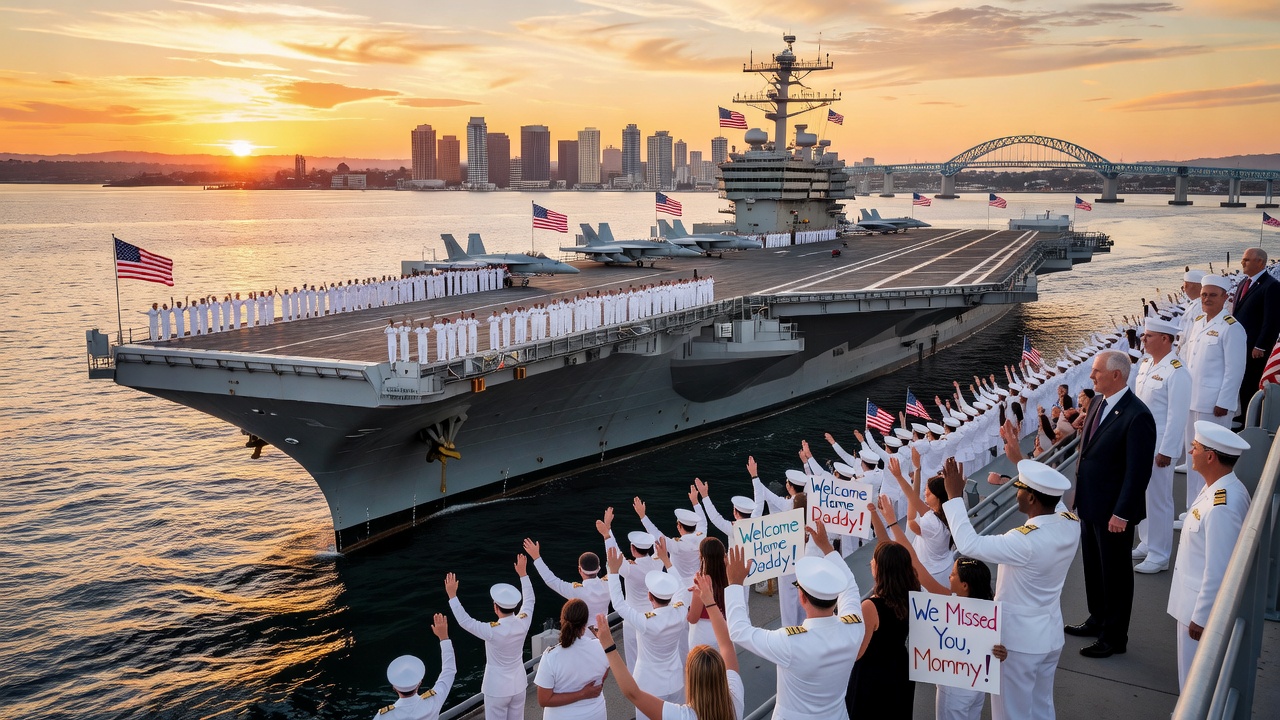
The USS Abraham Lincoln pulled back into its home port of San Diego after nearly ten months at sea, closing out one of the most demanding carrier deployments in recent memory. The carrier strike group spent more than 260 consecutive days without a single port call, according to the Pentagon, while supporting U.S. military operations against Iran. That stretch of unbroken sea duty is extraordinary even by the standards of modern naval deployments, which typically include scheduled stops for crew rest, resupply, and maintenance.
A deployment defined by its intensity
Defense Secretary Pete Hegseth detailed the scope of what the Lincoln and its air wing carried out during those months: thousands of combat sorties and hundreds of Tomahawk missile launches. Numbers like these reflect sustained, high-tempo operations rather than a single engagement. Carrier strike groups are built around flexibility - the ability to project air power and strike capability from international waters without relying on land bases - but that flexibility comes at a cost when deployments stretch far beyond their planned length. Extended time on station means more flight hours, more maintenance cycles under pressure, and more strain on the systems and people that keep a carrier running around the clock.
The human toll of prolonged sea duty
The Navy disclosed eight suicide attempts among sailors in the carrier strike group during the deployment. That figure, reported without additional detail, points to a reality the military has acknowledged for years: isolation, unpredictable schedules, and separation from family support networks compound the psychological pressure of shipboard life. A carrier deployment already removes sailors from normal routines for months at a time. When a deployment runs well past its expected end date, with no port calls to break the monotony or offer contact with the outside world, the mental health burden on crews can intensify. Military mental health programs have expanded in recent years, but incidents like these renew scrutiny of whether support structures scale with deployment length and operational tempo.
Why this deployment ran so long
Carrier deployments are typically planned around six-to-seven-month windows, with extensions occurring when geopolitical circumstances demand continued presence. The Lincoln's deployment stretched toward ten months because of the ongoing conflict involving Iran, which required sustained carrier-based air power in the region. Extensions of this kind are not unprecedented, but they carry operational and financial costs: extended fuel and munitions resupply, accelerated wear on aircraft and ship systems, and disruption to the Navy's broader deployment rotation, which can ripple into readiness timelines for other carrier strike groups waiting their turn.
What comes next for the strike group and the region
With the Lincoln now in San Diego, sailors are reuniting with families after an absence that outlasted most expectations set at the start of deployment. For the Navy, the return triggers a period of maintenance, debriefing, and crew reset before the ship can be considered ready for its next rotation. Beyond the homecoming, the broader U.S.-Iran conflict that drove this deployment continues to shape regional security dynamics and global energy markets, where tensions in the Gulf region routinely influence oil pricing and shipping risk. The Lincoln's return does not signal an end to that wider situation - only the conclusion of one carrier's long turn at the center of it.