
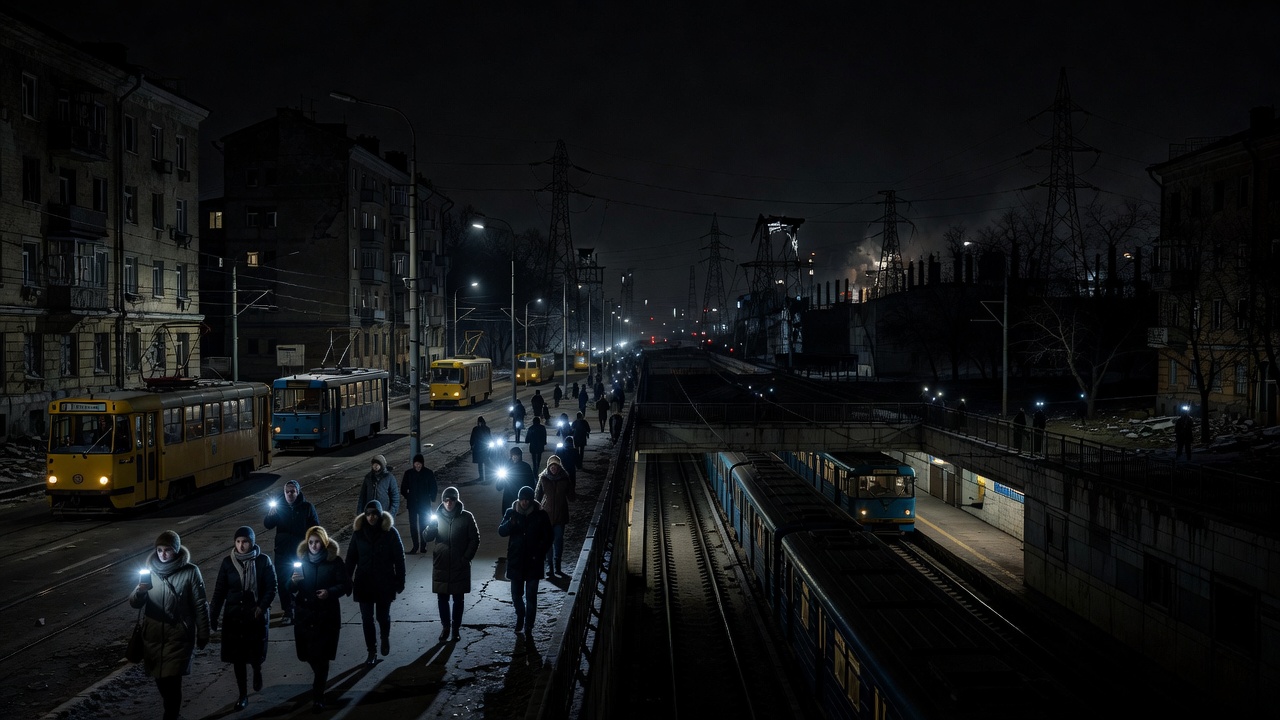
Kyiv went dark after Russian strikes hit Ukraine's energy infrastructure, cutting power across large parts of the capital and forcing the suspension of all three metro lines. Trams and trolleybuses stopped running as the electrical grid buckled under the damage, leaving residents to find their way through unlit streets and underground passages using their phone flashlights. The disruption underscores how exposed Ukraine's civilian infrastructure remains as colder months approach, when demand on the power network rises sharply.
A Grid Under Repeated Pressure
Ukraine's energy system has absorbed years of targeted damage, and each new wave of strikes compounds existing vulnerabilities. Power plants, substations and transmission lines are not easily or quickly replaced, which means that even localized damage can ripple outward into citywide outages. Metro systems, which depend on a continuous electrical supply to run trains and ventilate tunnels, are particularly sensitive to these disruptions - a short interruption at a single substation can halt an entire line until engineers assess the damage and reroute capacity.
Officials have warned that further attacks on the grid are likely as winter sets in, a pattern consistent with previous years in which the approach of cold weather coincided with intensified strikes on energy facilities. The reasoning behind that warning is straightforward: heating, lighting and water pumping all depend on electricity, so pressure on the grid during winter has a broader human cost than at other times of year.
Why Infrastructure, Not Just Military Targets, Matters
Energy infrastructure sits at the intersection of military strategy and civilian life. When transformers or substations are damaged, the effects are rarely confined to one neighborhood. Hospitals, water treatment facilities, telecommunications networks and public transit all draw from the same grid, so an outage in one area can cascade into service failures elsewhere. This is why emergency outages - deliberate, rolling cuts to parts of the network - are often used by grid operators to prevent a complete system collapse when demand outstrips available supply.
For residents, the practical result is a daily uncertainty: not knowing when power will return, which services will function, or whether public transport will be running. That uncertainty has knock-on effects for businesses, schools and essential services, all of which must adapt operations around unpredictable power availability.
What Comes Next
Repair crews typically move quickly to restore partial service after strikes, prioritizing critical infrastructure such as hospitals and water systems before turning to broader restoration. But repeated damage over time strains both equipment reserves and the workforce capable of repairing specialized electrical infrastructure. Ukrainian officials have been explicit in cautioning that further attacks should be expected, framing the coming winter as a period of heightened risk for the country's energy network and, by extension, for the millions of people who depend on it daily.